
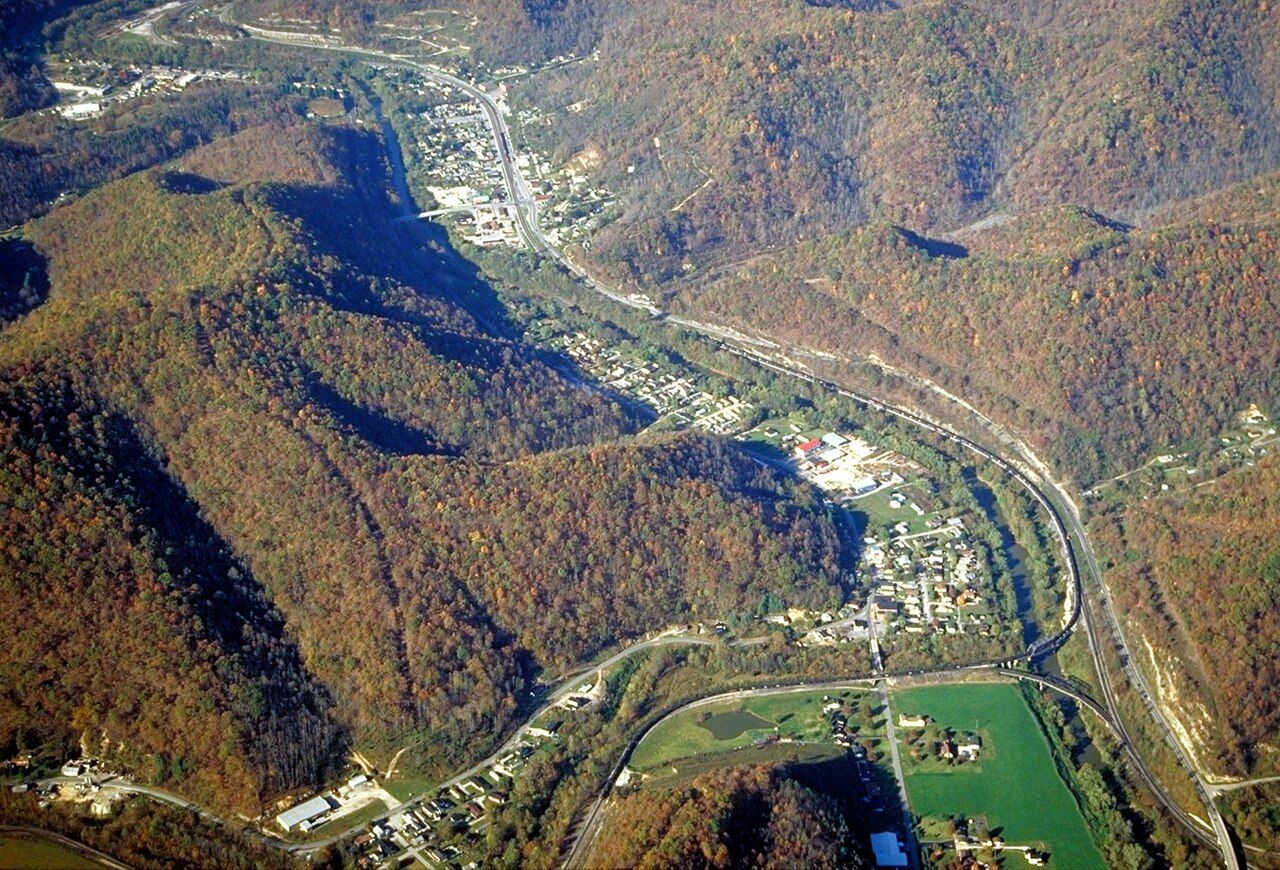

The Tug Fork of the Big Sandy River is a narrow, brown, winding river, and for most of its length it is also a state line. On the west bank lies Pike County, Kentucky. On the east bank lie Mingo and Logan counties, West Virginia, though in the feud years all of the West Virginia side here still belonged to Logan County; Mingo was carved out of it only in 1895. Between roughly 1865 and 1891 the Hatfields, mostly on the West Virginia side, and the McCoys, mostly on the Kentucky side, fought a quarrel that left more than a dozen people dead and reached a governor's office, a state legislature and the United States Supreme Court.
It helps to know from the start that the two families were not strangers. They had intermarried, traded, worked timber together and sat on the same juries. Some McCoys sided with Hatfields at key moments. The feud was less a war between two clans than a series of personal grudges that pulled in kin, neighbours and, eventually, lawmen.
A killing at the end of the Civil War
Most accounts begin in January 1865 with Asa Harmon McCoy, a brother of Randolph McCoy who had served in the Union army. He came home to Pike County near the end of the war and was shot dead in the woods. The Logan Wildcats, a Confederate home guard band associated with William Anderson Hatfield, known as Devil Anse, were suspected. Many tellings point to Jim Vance, an uncle of Devil Anse, as the man who did it. Nobody was ever tried, and the record is thin enough that historians treat the killing as a likely root of bad feeling rather than the clear first shot of the feud.

The hog, the romance and the first deaths
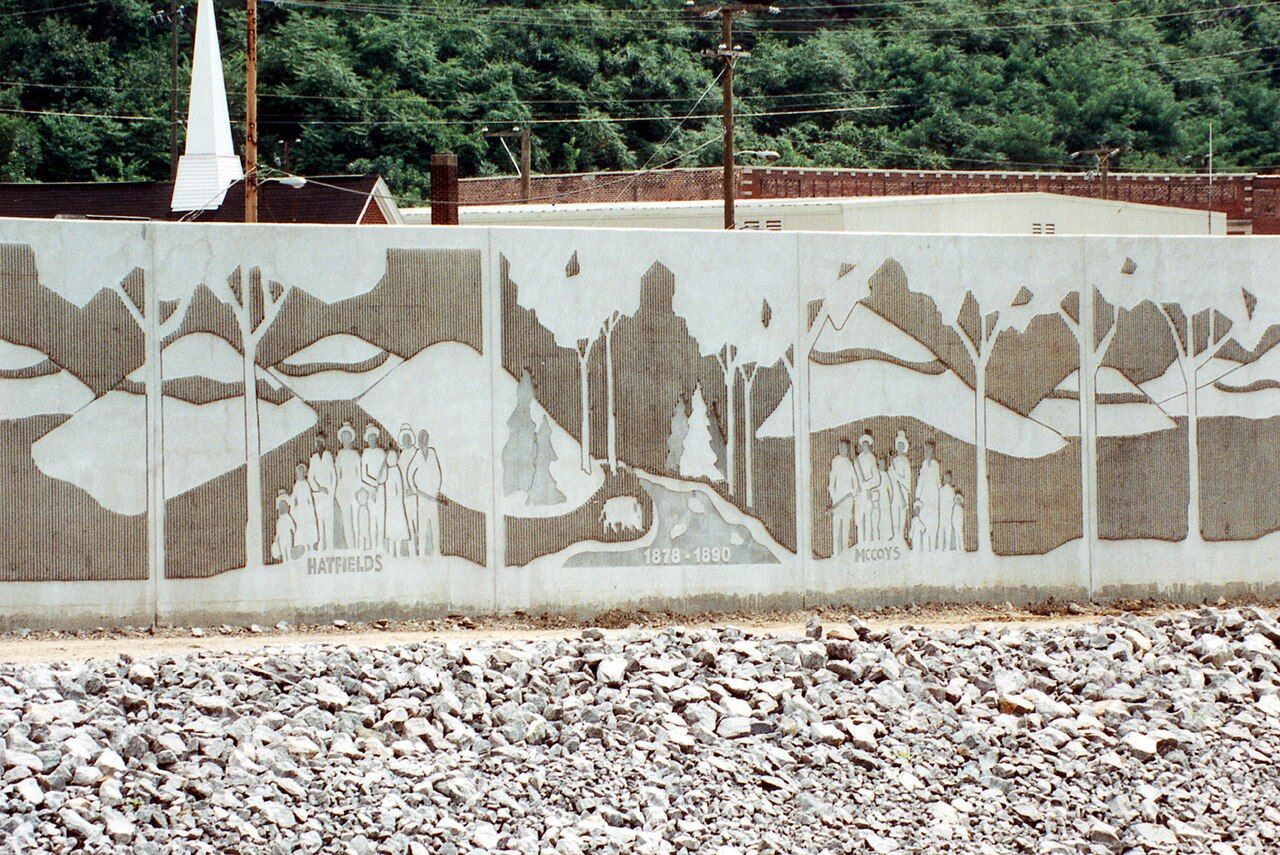
In 1878 Randolph McCoy accused Floyd Hatfield of keeping one of his hogs. The case went before a justice of the peace who was himself a Hatfield, and the jury, the story goes, was split between the two families. A McCoy relative, Selkirk McCoy, voted with the Hatfields, and the testimony of Bill Staton, a man tied to both sides, helped decide it. Floyd kept the hog. The full story is in the 1878 hog trial. Two years later Staton was shot dead in a fight with two of Randolph's nephews, Sam and Paris McCoy; Sam was tried and acquitted on grounds of self-defence.
Also in 1880, at an election gathering, Devil Anse's son Johnse Hatfield met Randolph's daughter Roseanna McCoy. She went to live with him across the river, the families would not agree to a marriage, and she later came home alone. The romance has been retold so often, and so freely, that it is worth reading what is known about Johnse and Roseanna before trusting any film version.
Election day 1882 and the pawpaw trees
The feud turned deadly beyond doubt in August 1882. At an election-day gathering on Blackberry Creek in Pike County, three of Randolph's sons, Tolbert, Pharmer and young Randolph Jr., known as Bud, fought with Ellison Hatfield, a brother of Devil Anse. Ellison was stabbed many times and shot. The brothers were taken into custody by Kentucky officers, but a Hatfield party took them from the officers and held them across the river while Ellison lay dying.
When Ellison died, the three McCoy brothers were brought back to the Kentucky bank, tied to pawpaw bushes and shot. Bud was about fifteen. A Pike County grand jury indicted around twenty Hatfields, Devil Anse among them, but West Virginia did not hand them over and for several years the warrants sat unserved. The details are in election day, August 1882.

New Year's night and the courts
In 1887 the old indictments were revived. Perry Cline, a Pikeville lawyer related to the McCoys by marriage, pressed the governor of Kentucky to act, and rewards were posted. To stop the witnesses, a band led by Jim Vance and Devil Anse's son Cap Hatfield went to Randolph McCoy's home on the night of 1 January 1888. Devil Anse was not with them. The raiders set the house on fire. Alifair McCoy was shot dead in the yard and her brother Calvin was killed; their mother, Sarah, was beaten and badly hurt. Randolph escaped into the dark.
Another stop · Blackberry CreekNew Year's night, 1888The feud was less a war between two clans than a series of personal grudges that pulled in kin, neighbours and, eventually, lawmen.
The attack turned opinion hard against the Hatfields. Frank Phillips, a Pike County deputy, led armed posses across the state line, killing Jim Vance and capturing several Hatfields and their allies. Later that January the two sides met in a gunfight on Grapevine Creek in West Virginia. The governors of Kentucky and West Virginia argued over the arrests, and the dispute went to the United States Supreme Court, which ruled in 1888 that Kentucky could try the men it held even though they had been taken without proper extradition. In the Pikeville trials that followed, several men received life sentences, and Ellison Mounts was hanged in Pikeville in February 1890. By 1891 the killing had stopped, and a truce is usually dated to that year.
The record and the legend
Newspapers in the 1880s turned the quarrel into a national story, and they were not careful. Reporters who never reached the Tug Valley wrote about blood oaths and mountain savagery, and later writers added dialogue, motives and romances that nobody recorded at the time. The core is agreed: the 1878 hog case, the 1882 killings, the New Year's 1888 attack, the Grapevine Creek fight, the court cases and the 1890 hanging. Much else, including exact death tolls, who fired which shot and what people said in their final moments, depends on whose account you read. Where accounts differ, these pages say so.
Historians have also argued over causes. Some see Civil War loyalties; others see land, timber and the arrival of outside money; others see two strong-willed men and too much moonshine. The truth probably sits among all of these, and none of them makes the deaths any less real for the families who buried their children.
Why people still come
The feud ended long ago, and the families themselves have made peace in public, but the valley still draws visitors who want to stand where it happened. The places are scattered across two states: the Hatfield graves and Devil Anse's statue near Sarah Ann, Randolph McCoy's grave in Pikeville, the McCoy homeplace on Blackberry Creek, the courthouse where the trials were held, and Matewan on the river, which carries feud history and the later mine wars. A sensible order for seeing them is in driving feud country.
Most of these sites sit on or near private land, many of the graves belong to families who still tend them, and the roads are narrow and busy with local traffic. Go slowly, park only where it is clearly allowed and treat each grave as somebody's relative, because it is.
Back to The feud, year by year