
A block of the quilt
Tug Valley towns
Pikeville, Williamson and Matewan, and the river that splits two states.
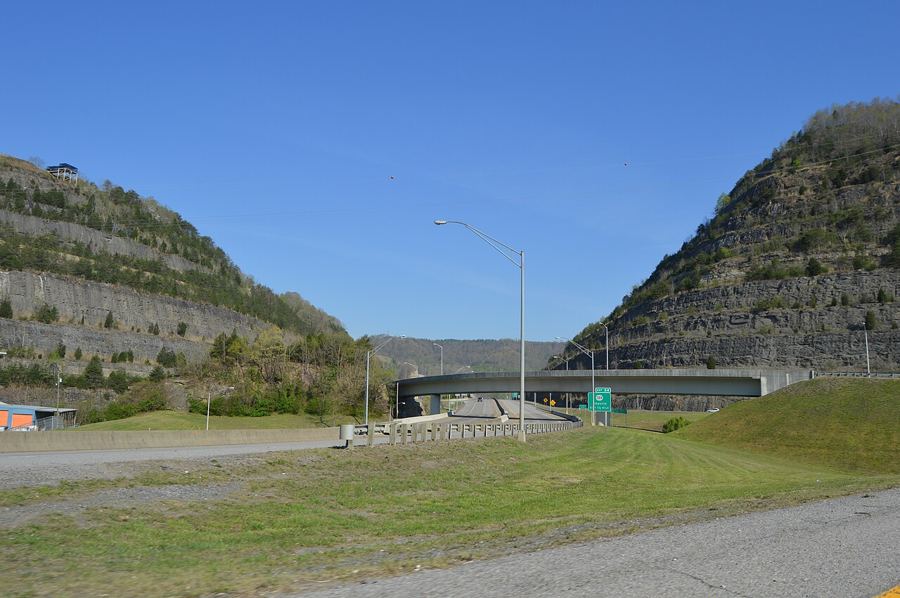 1888 to 1890; todayPikeville: the courtroom town of the McCoy sideWhere the feud ended in court rather than in the hollows: a river-bend county seat with a courthouse square, a ridge cut in half to move a river, and the McCoy graves above town.
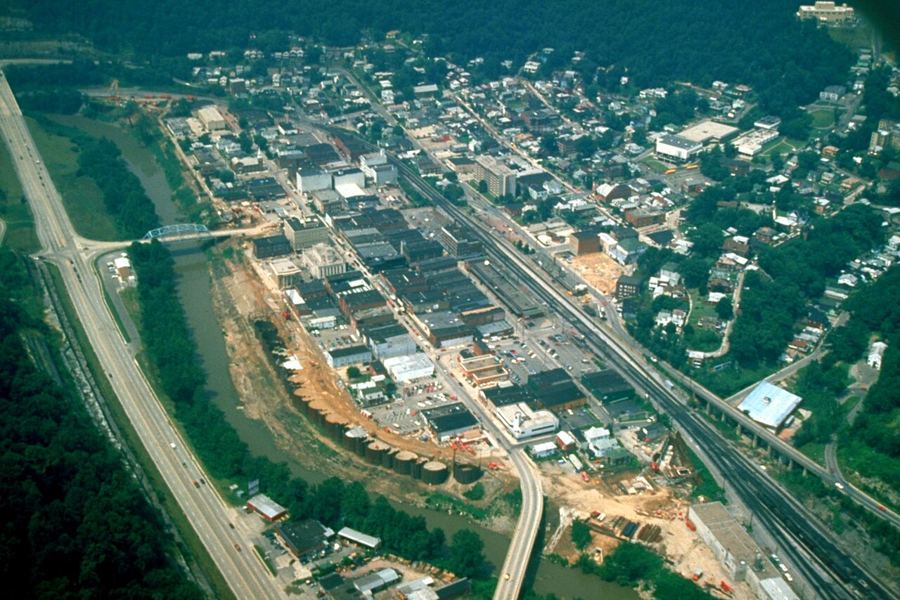 1890s to todayWilliamson: a coal town built on the river's edgeMingo County's seat sits tight between the Tug Fork and the ridges, with a house made of coal, a floodwall painted with local history and rail yards that never really sleep.
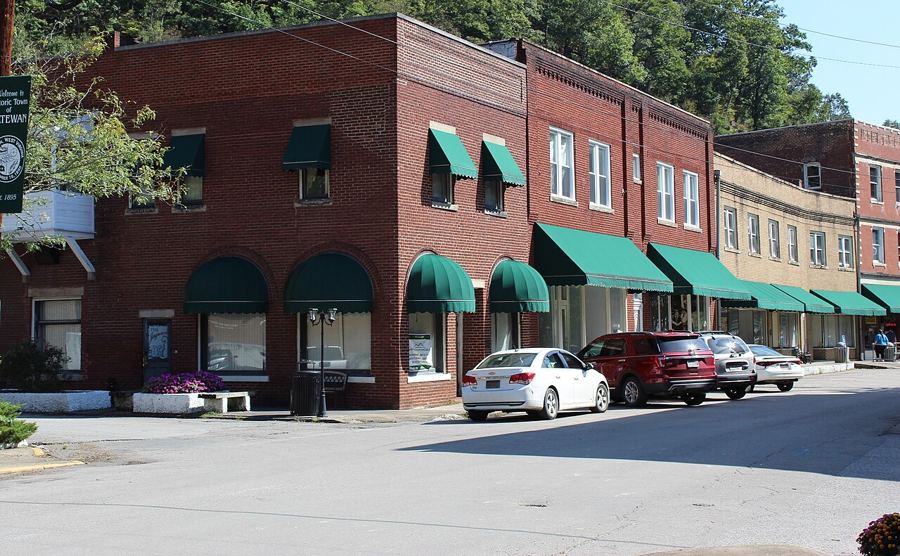 1882 and 1920Matewan: one small town, two hard historiesA few streets between the Tug Fork and the ridge hold feud-era ground, the scene of the 1920 Matewan Massacre, a floodwall painted with the valley's past and a museum of the mine wars.
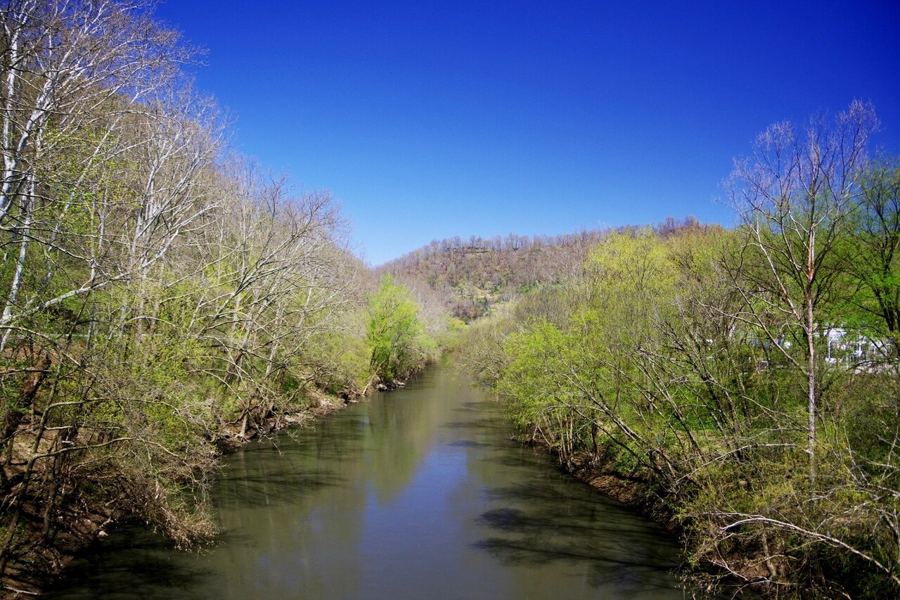 1860s to todayThe Tug Fork: a river that became a borderThe Tug Fork of the Big Sandy carved the valley, set the state line, carried the railroad and the floods, and decided which side of the water a feud killing fell on.
Credits: Nyttend | public domain source file; U.S. Army Corps of Engineers, photographer not specified or unknown | public domain source file; FloNight | cc by-sa 4.0 (source file); Brian Stansberry | cc by 4.0 (source file)


